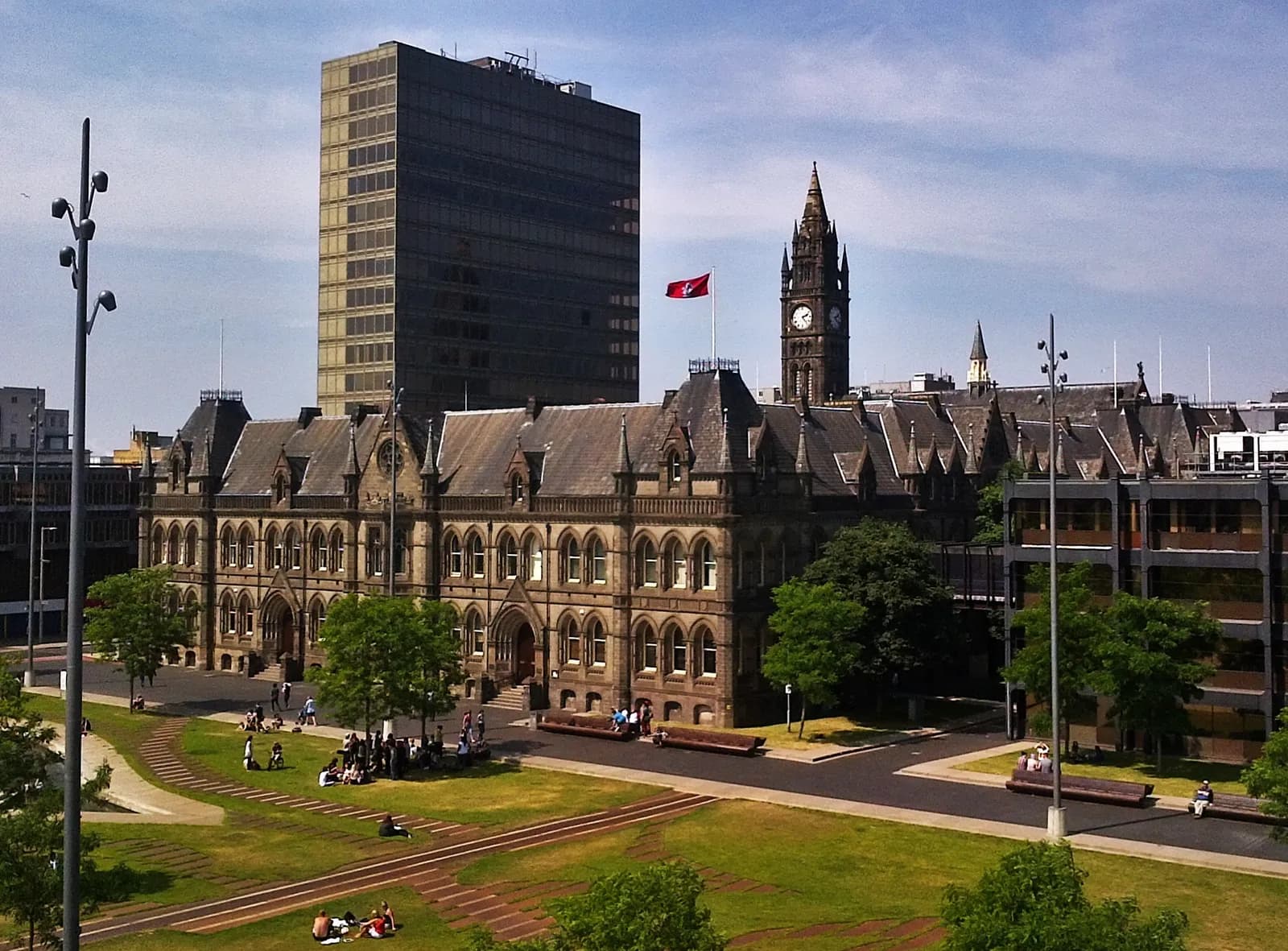
Middlesbrough Town Hall has stood at the heart of the town since 1889, serving as both a seat of local government and a stage for some of the biggest names in music. The building's 135-year history reflects the evolution of Middlesbrough itself, from an industrial powerhouse to a modern cultural destination.
A Victorian Statement in Stone
The foundation stone was laid in 1883, and the Town Hall officially opened on 23 January 1889. The Prince and Princess of Wales, who would later become King Edward VII and Queen Alexandra, performed the opening ceremony. The Princess set the clock in motion on that day; it had been manufactured by R. Richardson of Sussex Street, Middlesbrough, whilst the bells, comprising one hour bell and four quarter bells, were cast by Taylor of Loughborough.
The building was designed by George Gordon Hoskins of Darlington in the French Gothic style, making it one of the last large Gothic-style town halls constructed in England. Built of sandstone ashlar with slate roofs around four sides of a courtyard, the structure cost £130,000, a substantial sum that demonstrated Middlesbrough's prosperity during the height of its industrial era.
The Town Hall replaced the Old Town Hall in the Market Place in the St Hilda's area and quickly became the centre of municipal life. It accommodated the local courtroom until the new law courts building opened in Victoria Square in 1973. From 1 April 1974 to 1 April 1996, it served as the meeting place of Cleveland County Council.
Royal Connections
The Town Hall has maintained its connection with the monarchy throughout its history. Queen Elizabeth II, accompanied by the Duke of Edinburgh, visited the building on 4 June 1956. Such visits underscored the venue's importance not merely as a local facility but as a civic landmark of regional significance.
A Stage for Legends
Beyond its civic functions, the Town Hall has carved out a reputation as one of the North East's premier entertainment venues. The building contains a 1,190-seat theatre with a proscenium stage and balcony seating, plus a Crypt concert hall in the basement with capacity for up to 600 and a large bar. The theatre organ, featuring four manuals, was built by William Hill & Sons in 1898.
The venue's showbusiness credentials are impressive. David Bowie performed in the hall on 8 June 1972, with tickets costing just 60p. The gig, which started at 7.30pm, featured support from the JSB Band. Iron Maiden performed at the Town Hall in 1980 and again in 1981. Other notable acts connected with the venue include Paul Weller, Robbie Williams, and James Arthur.
The £7.7 Million Transformation
The Town Hall's most significant chapter in recent years came with a major refurbishment project announced in 2015. Funded by a £3.7 million Heritage Lottery Fund grant and £4 million from Middlesbrough Council, the £7.7 million project aimed to secure the building's future as a cultural hub.
The venue closed in April 2016 for approximately 21 months. The work included the addition of a glass atrium, a new bar and coffee shop, a community room, improved lighting, and the restoration of previously inaccessible Victorian spaces, including the courtroom, cells, and fire station, for public access.
The refurbishment was completed in March 2018, with the official reopening taking place in May 2018. In March 2018, the venue secured Arts Council England National Portfolio Organisation status, bringing £249,000 per year in funding until 2022.
The Town Hall Today
Today, Middlesbrough Town Hall continues to serve multiple purposes. Located on Albert Road, it is available for hire for events and performances, filming, meetings and conferences, weddings and receptions. The venue hosts a regular programme of concerts, comedy, theatre, classical cafés, community choirs, and workshops.
The 130th anniversary in January 2019 was marked by a laser light show and a gig by Paul Smith of Maximo Park, demonstrating the venue's continued relevance as a performance space. The building remains a Grade II* listed structure, having received this designation on 17 July 1968, reference number 1136659.
From council chambers to concert halls, from royal visits to rock gigs, Middlesbrough Town Hall has adapted to the changing needs of the town whilst preserving its Victorian character. As the building enters its 136th year, it stands as a testament to civic ambition and the enduring power of live entertainment.